
Desktop vs Cloud: Why Local Software Is More Secure for Document Automation
When your team builds contracts, invoices, or certificates from Excel data, the choice between a cloud service and a local Word desktop solution matters more than speed. A locally‑run workflow keeps source files on the corporate PC, eliminates network exposure, and gives you full control over who can read or edit each document. Understanding the security implications helps you decide which approach aligns with your organization’s compliance and risk policies.
Current suite demo
Contractor + Factory • local Word/PDF output
Quick answer
Local desktop automation keeps every spreadsheet row, template, and generated file inside the corporate network. Because the process runs on the user’s machine, no data are uploaded to external servers, and access can be limited to existing Active Directory permissions. This reduces exposure to internet‑based threats and simplifies audit trails.
Running the conversion on a local PC means the spreadsheet and Word template never travel over the internet. Only the final PDF or DOCX is stored locally, so you retain full control over encryption, backups, and who can open the files.
Why this matters
Choosing a local automation path directly influences data residency, user permissions, and the organization’s exposure to third‑party breaches. When confidential customer details or proprietary pricing tables are embedded in documents, where the processing occurs determines the risk surface.
Data never leaves the corporate perimeter
With a desktop‑only solution, the Excel workbook, Word template, and any inserted images stay on the internal file server or the user’s hardened workstation. No upload step is required, so there’s no accidental exposure to SaaS storage or cloud‑based malware scanners. Access can be governed by existing file‑system ACLs, and the IT team can enforce encryption at rest using BitLocker or similar tools. This clear boundary simplifies compliance with regulations that mandate on‑premises handling of personal data.
What goes wrong
Teams that jump to cloud‑based document generators often assume convenience outweighs security, but the hidden pitfalls become apparent when sensitive data is inadvertently shared or when internet outages stop the workflow.
Typical cloud workflow
A user uploads the Excel file to a SaaS portal, selects a template, and clicks generate. The service copies the spreadsheet to its own storage, processes each row in the cloud, and returns PDFs via a web link. While simple, the source data now resides on external servers, subject to the provider’s security policies, potential breaches, and retention rules you cannot control.
Secure local workflow
The same Excel sheet lives on the corporate file share. A VBA macro launches Word locally, opens the template, pulls each row, inserts images from a trusted folder, and saves a PDF with ExportAsFixedFormat. No data ever leave the network, and permissions are enforced by Windows ACLs. If the PC is offline, the process still runs, guaranteeing continuity.
The cloud shortcut can introduce data‑exposure risks that a well‑designed desktop process avoids.
What the workflow looks like
A reliable offline workflow stitches together Excel data, a Word template, and optional images, then produces DOCX and PDF files in organized folders. Each step can be automated with a single VBA macro that runs on the desktop.
Gather and validate source data
Start with a master Excel workbook where each row represents one contract or report. Include columns for all merge fields – client name, date, amount – plus optional columns for image filenames. Before running the macro, use Excel’s built‑in validation to confirm that any referenced image file actually exists on the local disk, avoiding runtime errors.
Prepare template and image folder
Open the Word template that contains content controls or merge‑field placeholders matching the Excel column names. Ensure special tags such as {{photo_logo}} or {{photo_signature}} are present where images belong. Create a dedicated ‘Images’ folder next to the workbook and copy all required PNG files, keeping filenames identical to the values stored in Excel.
Run VBA macro to generate documents
Run the VBA macro. For each worksheet row it reads the cell values, maps them to the Word document’s merge fields via the .Fields collection, and inserts images with .InlineShapes.AddPicture, using the full path built from the Images folder. After populating the document, the macro calls .ExportAsFixedFormat to create a PDF copy, and then saves the Word file with a unique name derived from the row data.
Organize output and clean up
Finally the macro moves the newly created DOCX files into a ‘WORD’ sub‑folder and PDFs into a ‘PDF’ sub‑folder under a common ‘Output’ directory. It writes a simple log entry for any missing images or validation failures, then restores Application.ScreenUpdating and alerts the user that the batch run finished successfully.
A visual example
Simple visual illustration.
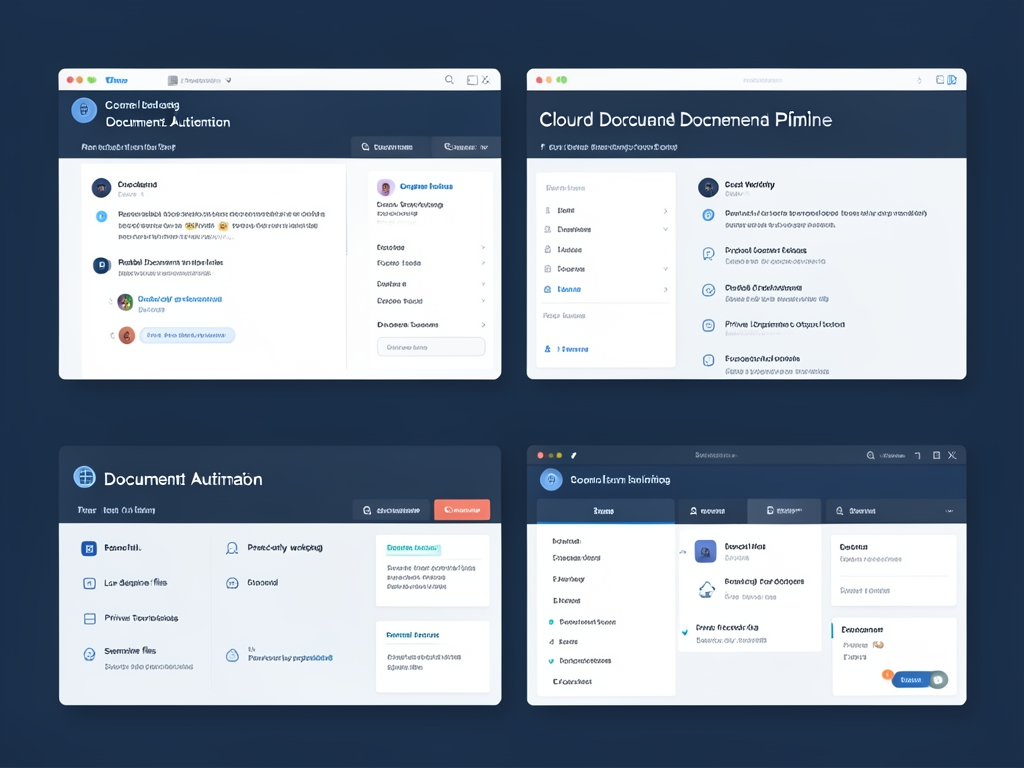
AI-generated illustration for article.
A grounded VBA example
The macro below demonstrates a practical, offline‑first approach that reads Excel rows, populates a Word template, inserts images, and exports PDFs without leaving the PC.
The routine validates each image path, creates output folders if necessary, and uses Word’s built‑in ExportAsFixedFormat for reliable PDF creation. Errors are logged to a simple text file for later review.
Option Explicit

Sub GenerateDocsFromExcel()
    Dim xlApp As Object
    Dim xlWb As Object
    Dim xlWs As Object
    Dim wdApp As Object
    Dim wdDoc As Object
    Dim rowIdx As Long
    Dim lastRow As Long
    Dim outputPath As String
    Dim imgFolder As String
    Dim logPath As String
    Dim fso As Object
    Dim logFile As Object

    ' Initialize Excel objects
    Set xlApp = CreateObject("Excel.Application")
    Set xlWb = xlApp.Workbooks.Open(ThisWorkbook.Path & "\SourceData.xlsx")
    Set xlWs = xlWb.Worksheets(1)

    ' Initialize Word
    Set wdApp = CreateObject("Word.Application")
    wdApp.Visible = False

    ' Paths
    outputPath = ThisWorkbook.Path & "\Output"
    imgFolder = ThisWorkbook.Path & "\Images"
    logPath = ThisWorkbook.Path & "\generation_log.txt"

    Set fso = CreateObject("Scripting.FileSystemObject")
    If Not fso.FolderExists(outputPath) Then fso.CreateFolder outputPath
    If Not fso.FolderExists(outputPath & "\WORD") Then fso.CreateFolder outputPath & "\WORD"
    If Not fso.FolderExists(outputPath & "\PDF") Then fso.CreateFolder outputPath & "\PDF"

    Set logFile = fso.OpenTextFile(logPath, 8, True)

    lastRow = xlWs.Cells(xlWs.Rows.Count, "A").End(-4162).Row ' xlUp = -4162
    For rowIdx = 2 To lastRow ' assume header row
        Dim docName As String
        docName = xlWs.Cells(rowIdx, "B").Value ' example: client name column B
        If Trim(docName) = "" Then
            logFile.WriteLine "Row " & rowIdx & ": missing client name, skipped."
            GoTo NextRow
        End If

        ' Open template
        Set wdDoc = wdApp.Documents.Open(ThisWorkbook.Path & "\Template.docx")

        ' Fill merge fields
        Dim fld As Object
        For Each fld In wdDoc.Fields
            Select Case Trim(fld.Code.Text)
                Case "MERGEFIELD ClientName"
                    fld.Result.Text = xlWs.Cells(rowIdx, "B").Value
                Case "MERGEFIELD InvoiceDate"
                    fld.Result.Text = xlWs.Cells(rowIdx, "C").Value
                ' add more field mappings as needed
            End Select
        Next fld

        ' Insert image if file exists
        Dim imgPath As String
        imgPath = imgFolder & "\" & xlWs.Cells(rowIdx, "D").Value ' column D holds image filename
        If fso.FileExists(imgPath) Then
            wdDoc.InlineShapes.AddPicture FileName:=imgPath, LinkToFile:=False, SaveWithDocument:=True
        Else
            logFile.WriteLine "Row " & rowIdx & ": image not found – " & imgPath
        End If

        ' Save DOCX
        Dim docFullPath As String
        docFullPath = outputPath & "\WORD\" & CleanFileName(docName) & ".docx"
        wdDoc.SaveAs2 docFullPath, 16 ' wdFormatXMLDocument = 16

        ' Export PDF
        Dim pdfFullPath As String
        pdfFullPath = outputPath & "\PDF\" & CleanFileName(docName) & ".pdf"
        wdDoc.ExportAsFixedFormat OutputFileName:=pdfFullPath, ExportFormat:=17 ' wdExportFormatPDF = 17

        wdDoc.Close False
NextRow:
    Next rowIdx

    ' Cleanup
    xlWb.Close False
    xlApp.Quit
    wdApp.Quit
    logFile.WriteLine "Generation completed at " & Now
    logFile.Close
    MsgBox "Document batch complete. Check the Output folder.", vbInformation
End Sub

Function CleanFileName(strIn As String) As String
    Dim illegal As Variant
    illegal = Array("/", "\", ":", "*", "?", """, "<", ">", "|")
    Dim i As Long
    CleanFileName = strIn
    For i = LBound(illegal) To UBound(illegal)
        CleanFileName = Replace(CleanFileName, illegal(i), "_")
    Next i
End Function
Adapt the column names and folder paths to match your own project structure.
Where VBA starts to strain
While VBA can drive a full document pipeline, the approach has practical limits as complexity grows.
Maintenance overhead grows quickly
Every new field, tag, or image type requires changes to the macro logic, testing, and version control. Large teams may struggle to keep a single VBA script in sync, especially when multiple Excel versions or Word templates are in use. Error handling becomes more intricate, and debugging across two Office applications can be time‑consuming. When the workflow needs advanced branching, conditional content, or integration with external systems, a designer‑oriented tool often provides a clearer, more maintainable solution.
A calmer way to standardize the workflow
DocxForge Pro offers a purpose-built local Windows suite that automates the same workflow without sending document files through a cloud stack.
DocxForge Pro is a local Windows document automation suite for Excel or structured case data, Word templates, text tags, photo tags, and Word or optional PDF output.
Use Contractor when you want controlled case work from Excel and/or structured case data. Use Factory when you want faster Excel batch production, local Word output, and optional PDF export in larger runs.
Start Free 7-Day TrialZero‑code batch generation
Define your Excel source, Word template, and image folder once in the UI. The engine handles field mapping, image insertion, and PDF export automatically, eliminating VBA maintenance.
Built‑in logging and folder management
The application creates WORD and PDF output folders, records missing‑image warnings, and enforces the same security boundaries as a desktop‑only solution.
Frequently asked questions
Below are answers to common questions about local versus cloud document automation.
When is VBA enough, and when does it become hard to maintain?
VBA works well for small, stable workflows where the data schema and template rarely change. As soon as you need frequent template updates, additional document types, or complex branching logic, the macro starts to require constant rewrites and testing, making a dedicated automation tool a more sustainable choice.
What changes when the workflow also needs PDF output or images?
Adding PDF export means you must call Word’s ExportAsFixedFormat and ensure the output folder exists. Image insertion requires verifying each file path before calling AddPicture, handling missing files, and possibly scaling. These steps increase macro length and error‑handling complexity, which a purpose‑built product can address with built‑in options.
Which option is easier to repeat and hand off?
A local VBA macro can be shared, but the recipient must trust that the correct template, Excel layout, and folder structure are present. DocxForge Pro provides a self‑contained package where the user selects the source files and clicks run, offering a repeatable, audit‑ready process that can be handed to anyone without code knowledge.
What is the main trade‑off between the compared approaches?
Local desktop automation gives you data residency, granular permission control, and offline reliability, but it requires VBA maintenance and IT‑level setup. Cloud services offer instant scalability and zero‑install convenience, yet they expose data to external storage and rely on internet connectivity. The choice hinges on whether security and compliance outweigh the convenience of a hosted solution.
Topics and Tags
Browse related topic clusters and workflow tags connected to this article.
Continue Reading
Explore more articles related to this workflow, problem, or document automation topic.
Google Apps Script vs Desktop Document Automation for Sensitive Files
Compare Google Apps Script and desktop document automation for sensitive files
Read articleHow to Build a Local-Only Document Workflow for Sensitive Files
Build a local-only document workflow for sensitive files
Read articleHow to Build a Hybrid Workflow: Google Sheets Intake, Word/PDF Output
Learn how to combine a Google Sheets intake form with a local Windows‑based Word/PDF generation workflow using VBA and a lightweight Apps Script helper. The guide walks through the common pitfalls, step‑by‑step automation, and when to consider a more robust product solution.
Read articleHow to Generate Membership Forms and Letters in Batches
A step‑by‑step guide for membership organisations to generate personalised forms and letters in bulk using Excel data and Word templates.
Read article